On Calories and Weight Loss

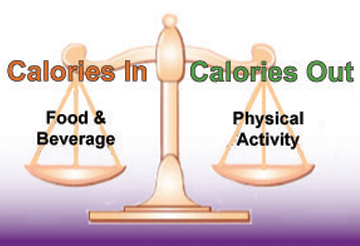
Calories: the bane of every dieter. Except, we see how well that’s working for us in the modern U.S. What are calories, and how important are they? Well, here are my thoughts, and I’d love feedback from anyone with something to add.

Calories, technically speaking, are simply a measurement of energy. A ‘calorie’ is the amount of energy required to raise the temperature of one gram of water by one degree Celcius at one atmosphere of pressure–but that’s not exactly what we measure in food. What we use there is a ‘Calorie’ (it must be capitalized), which is the amount of energy required to raise the temperature of one kilogram of water by one degree Celcius. Why are we using the metric system? I don’t know.

But here’s the first obstacle: actual Calories for food are no longer calculated. Instead, existing measurements have been averaged to find the approximate number of Calories per gram of protein, carbohydrate and lipid. So, no matter how carefully you read your packaging, you never know exactly how many Calories are in what you are eating–you only have an approximation.

Close enough, you say? Well, consider that this approximation was arrived at by burning the food. That is, the food was placed in a sealed container, put underwater, and lit on fire to determine how much energy was released (based on how much warmer the surrounding water became). What does that have to do with anything? Well, your body reduces food into digestible pieces through two processes: mechanical digestion and chemical digestion. Mechanical digestion consists of things like chewing and stomach-churning, while chemical digestion consists of things like hydrolysis (the breakdown of protein by acids) and enzyme reactions. This is all completely different from burning; a process chemically known as oxidation. If oxidation is occurring inside your body, you are in trouble.

This means two things: first, we are measuring energy released by the wrong process. That means that Calorie measurements are actually completely meaningless when it comes to nutrition. Second, even if we establish a link between energy released by digestion and energy released by oxidation, we have been measuring energy released from things that your body does not actually store for energy. Fiber, for instance, is indigestible by humans–but burns quite nicely. Likewise protein–which might be used for energy, but is much more likely to be used to repair damaged tissue (something which lipid and carbohydrate cannot do).

Finally, let’s examine the idea that weight gain is caused by excess calorie intake. How many times have we heard that someone is just holding ‘water weight’? Is this different from other weight? No. Yet water contains no Calories. If I ate a pound of sand, would I gain a pound of weight (before I died)? Absolutely. Yet sand contains no Calories.

My conclusion is this: while the measurment of protein, carbohydrate, and lipid grams can be useful, the measurement of Calories in food is absolutely meaningless as far as health or weight control. What is important is how your body will actually interact with the food in question–and that is determined more by the nutrient composition of the food, than by how well it burns.

Classics of Japanimation

Okay, anime fans: I’m trying to put together a list of exemplary Japanimation. Not necessarily personal favorites, but features and series that really define the genre. Help me out?

Here’s what I’ve got so far:

Dragonball
Dragonball Z
Sailor Moon
Neon Genesis Evangelion
Cowboy Bebop
Ah! My Goddess

Akira
Ghost in the Shell
Ninja Scroll

On Science, Faith, Religion, and Mythology (Part I)

It is essentially the raison d’etre of the ‘New Atheist’ movement to assert an existential enmity between ‘science’ and ‘religion’; one that has always existed and can only be ended when ‘religious superstition’ is finally swept away by ‘scientific truth’. Which sounds awesome. But is any part of that statement valid? I shall examine this in three parts: In this, the first part, I shall examine the nature of science, and of faith; in the second part, of religion and of mythology; and in the third I shall examine their relationship to one another.

Let us begin:

Science
What we refer to today as ‘science’ is really a subset of natural philosophy. In particular, it is a method of inquiry by repeated observation which traces its roots back to the works Aristotle of Stagira (in particular, Categories, Physics, and Metaphysics). In its modern form, science is a method consisting of Observation (of an actual event), Proposition of Hypothesis (that is, creating an imaginary model to explain how the observerved event took place), Experimentation (an attempt to disprove the hypothesis-model), and then either Discarding the Hypothesis (if the experiment disproves the hypothesis), or Peer Review (if the experiment does not disprove the hypothesis). Rinse and repeat.

It should be noted that many irrational beliefs exist today regarding the nature of science, which may be lumped together in the category of ‘scientism’–that is, imagining that science is something more that it really is (often, a panacea). In order to avoid the error of scientism, let us complete our definition of science by examining what science is not:

a body of knowledge
This error is probably caused by the fact that when we study our current understanding of various fields investigated by the scientific method (embryology, climatology, etc.), we refer to them as ‘the sciences’. However, not only is erroneous in itself to use ‘science’ to refer a body of knowledge, but it gives rise to serious issues, as people confuse ‘doing science’ with ‘believing what a scientist tells them’. Science is not ‘revealed truth’, nor is it arrived at by ‘consensus’. It is a method of investigation, and nothing else.

the Truth
One thing that the scientific method can never provide us: the truth. Science works by building models, and attempting to disprove them. Hypotheses which survive multiple attempts at disproof may be elevated to theories, and theories to laws. This gives us models of ever-increasing accuracy, but it will never, and can never, give us the Truth. Even Newton’s famous Law of Universal Gravitation was eventually replaced by Einstein’s General Relativity–and we already know that General Relativity must eventually be replaced, because it is incompatible with quantum mechanics.

This limitation is inherent in both the method of inquiry (science) and the inquirer (humans, with limited consciousness and perception). However, the fact that science cannot give us ‘the Truth’ does not invalidate science, because that is not the purpose of science. Pretending that science is a road to ‘truth’ leads to nothing but confirmation bias (as we start designing experiments to ‘confirm’ our beliefs, rather than to disprove our hypotheses), and corrupts the entire endeavor of inquiry.

applicable to everything
Many young atheists will insist that the scientific method is sufficient to every area of knowledge; or, when that is quickly disproven, retreat to Richard Dawkins’ favored position that any question which cannot be answered by scientific inquiry does not deserve to be answered. I believe that I have covered that sufficiently here, but I’m always willing to entertain legitimate questions.

Faith
The quality of ‘faith’ is of often mischaracterized by atheists, and this mischaracterization has even made its way into many modern dictionaries. ‘Faith’ is used as either a synonym for ‘religion’ (more on why that is incorrect, in Part 2), or is defined as “belief without justification”. Note that this second definition is actually the defintion of superstition; it has nothing to do with ‘faith’ at all. Am I a faithful friend because I believe in something without justification? No. Is a recording faithful to the original because the recording believes in something without justification? No.

Faith is not a matter of belief, but of confidence. One has faith in something, because one is confident in it (by definition). Something is faithful, if one may place confidence in it. Confidence, by its nature, cannot given without justification. One person may not be able to grasp another person’s justification, but that does not invalidate the justification any more than the existence of math-dyslexics invalidates algebra.

Finally, I should note for those who will insinuate otherwise, I am not suggesting that faith, religion, and supersition are mutually exclusive. I am simply expaining, for those who do not understand, that they are not the same thing.

Conversations with Racists

Paraphrased for brevity and clarity, and due to unacceptable language:
—–
Me: So, let me see if I understand this correctly. Your assertion that everyone should be separated by skin color, and that people of certain skin colors should be given preferential treatment because of some injustice committed in no living person’s lifetime, to someone to whom they may or may not be related, means that you are not a racist.

But my assertion that everyone should be equal before the law, regardless of the amount of melanin in their skin or any action committed by anyone other than themselves, means that I am a racist.

Them: “Yes. That’s why nobody reads your blog, you racist!”
—–
Me: So, you believe that United States of America owes ‘reparations’ to ‘black’ people?

Them: “Yes. And stop using scare quotes!”

Me: Those aren’t scare quotes. I’m just wondering how you detemine who really qualifies for payments? How many generations removed from a slave ancestor still qualifies? What about ‘blacks’ with no slave ancestors? What about ‘blacks’ who are also the descendents of slave owners, while I am not? Any why not reparations to Native Americans and Chinese? And why should I be paying you for something I didn’t do, and wasn’t done to you? And that no one in any part of my family was involved in?

And what about the fact that the United States of America actually fought a war to free the slaves from the Confederate States of America, which no longer exists? That may not be why we went to war, but that’s what the war was about by the end, and we have a million Americans who died to make it happen.

Them: “Shut up, racist!”

Union Protections?

I am often called to, for my opposition to labor unions, and labor unions for government employees in particular. Labor unions are necessary, I am told, because they protect “workers” from the unfair practices of “capitalists”. But that’s not really true, is it? Those protections are all Federal law and have nothing to do with unions. Besides, not all of them are really “protections”–what about people who WANT to work more than 40 hours per week, but can’t–because of labor union interference? What about the long-standing tradition of children helping their parents in family-run businesses–once a way to teach responsiblity and keep interest in the family business, but now a “child-labor” issue?

But here’s the real harm that labor unions do: they create a false divide between ‘labor’ and ‘management’, and use it to extort money from ‘labor’. Once upon a time, trades operated in what were known as ‘guilds’. One entered the guild as an ‘apprentice’, who did the majority of busy work, with the objective of eventually becoming skilled enough to earn the rank of ‘journeyman’–a recognized craftsman who could generally work where and when he liked. With both diligence and talent, some eventually became ‘masters’, and ran their own shops. While these categories were all separate, there was no ‘apprentice class’ in which one would expect to spend their entire lives. The concept was one of progression through improvement.

Enter socialism, and the ‘labor union’ (didn’t know unions were socialist? Oh, yes.). Suddenly, we have a ‘labor class’ and a ‘management class’, and people increasingly expect to spend their entire careers in entry-level positions, taking on no additional responsibility, and yet to still have regular pay raises and benefits simply because they have stayed in place for a long time. In fact, in many places (such as the federal GS system), getting promoted can actually reduce your income–and that’s without even figuring in the income ‘tax’ (read: ‘penalty for working’).

In a free society, as the United States of America was created to be, exploitation of workers would result in the death of business. Free workers can always find employment elsewhere, or simply go into business for themselves. Instead, we have a society based on the labor-union ideal that promotions and pay raises should be based on how long you have worked somewhere, instead of how hard and how well you work. A society where unproductive workers are protected by ‘collective’ bargaining with productive workers–who cannot opt out because union membership is often required for employment at all (how ‘free’ is that?). And a society where fear of being ‘exploited’ by the person who has actually hired you and is paying you to work, is used to actually exploit you out of 25% of your earnings, which then go almost entirely either to union bosses (who produce nothing), or politicians who keep unions in power.

Do I think that we should return to a guild system? Certainly not. But we do need to get rid of labor unions, and the ‘us versus them’ mentality inherent in their existence. Or, at least get rid of compulsory membership, and put the same onus of ‘negotiating in good faith’ on the unions as has been put on the actual companies for which they work. As a free American, I protect myself. Certainly, if there were an instance in which I needed someone else’s protection, it would not look anything like a labor union.

“Nature” Study on Sea-Level Rise

According to Phys.Org, a new study has been published in Nature regarding an acceleration in sea-level rise. If you’ve read my paper (‘Socialism and Scientific Illiteracy’), you’ll understand why I am non-plussed by publication in Nature. In the Phys.Org piece, there’s lots of ‘estimates’ and ‘believes’ and ‘everyone agrees’. Bad enough. More importantly, the authors of the referenced study talk about using computer models to get away from actual recording devices. Because, you see, the actual recording devices aren’t good enough–so we have to simulate to get the answers that we want. The underlying cause of sea level rise, according to the authors, is that global warming (*gasp* I thought it was ‘climate disruption’!) is melting the polar caps.

Meanwhile, in the real world, the Antarctic ice cover has reached yet another new maximum.

Paleo 2.0

So, I came across this several-years-old article this morning. It is by one Dr. Kurt Harris, one of the leading Paleo gurus (although often at odds with the Paleo community in general). Unfortunately, none of the links for “further reading” work, and I cannot find any of his material (including his entire blog) on the internet.

I wish that I had come across his material sooner (when it was actually AVAILABLE); I have been a fan of the Weston A. Price Foundation for some time, and am glad to see someone with better credentials than I mixing their recommendations with the Paleo milieu.

“Not Biblically Correct” (Part 1)

I started this entry several months ago. I work on it for a bit, then get bored. It’s a bit dry. I’ve decided to go ahead and publish what I have now as “Part 1″… I’ll get to part 2 later. I hope this helps someone!

—–

I often receive negative feedback from evangical-run pages on Facebook for saying things which are not “Biblically correct.” To be honest, I give that as much regard as I give someone telling me that I am not being “politically correct”–that is, the only ‘correctness’ about which I worry is actual correctness.

Since being “Biblically correct” is a concern, however, I would like to address some things which I see often posted on Facebook which are not Biblically correct, in the hopes that the authors may correct themselves:
—–
1. Jesus
Let’s be clear: to the best of my knowledge, no person by this name has ever walked the Earth.

The name “Jesus” is actually an Anglicization of the Latin form “Iesu/Iesus”–a special-case fourth-declension name. Note that, in being transliterated into English, the “i” becomes a “j”–a consonant which does not exist in the Latin alphabet. “Iesu”, in turn, is derived from the Greek “Ieso/Iesous” (I will use the English alphabet throughout this article, for ease of reading). Finally, “Ieso”, is the Greek rendering of the Hebrew “Yehoshua” (commonly contracted to “Yeshua”). The Aramaic pronunciation–which is important to me, but may not matter to others–is actually “Isho” (and note how much closer that is to the Greek transliteration, than “Yehoshua”).

Does that mean that everyone needs to start learning Hebrew and saying “Yehoshua” all the time? No. But the correct translation of “Yehoshua” into English–used for every other instance of this name throughout the Christian canon–is JOSHUA. So, “Yehoshua bar Yosef” should actually be read “Joshua, son of Joseph” in English.

2. Christ
Before we even get in to the etymology of “Christ”, let’s clear up something else. People read this word like it’s a last name–Jesus Christ, son (presumably) Joseph Christ and Mary Christ. This is where we begin down the road of reading the Bible like it was written in English, for an American audience, last week. Folks, first-century Aramaic Jewish culture did not have last names. They had given names, and they were either “son of (father’s name)”, or “daughter of (father’s name)”. There was no Christ family running around Nazareth. Yeshua was ‘Yeshua bar Yosef’, not ‘Yeshua Christ’. So, where does “Christ” come from?

We begin similarly to investigating ‘Jesus’: ‘Christ’ comes from the Latin ‘Christus’, which is a special-case transliteration of the Greek ‘Xristos’. It is a special case because the actual translation of ‘Xristos’ into Latin is ‘Servator’–that is, ‘Savior’. Unlike the case of ‘Iesous’, however, ‘Xristos’ is not a transliteration from Hebrew, but an actual translation–of the word (Meshiach). That is, ‘Messiah’; the savior.

Therefore, ‘Jesus Christ’ is correctly written ‘Jesus THE Christ’, and more correctly written ‘Joshua the Savior.’

3. Jehovah
Many of you will be familiar with the Third Commandment of the Decalogue, “You will not take the name of THE LORD, your god, in vain (I don’t do “thou shalt”s. I find no value in the archaic English; it just gives people an extra excuse for misintrepreting the text).” Many of you also would write it incorrectly, with “THE LORD” not in all caps–it is that way for a reason. The Jews have many names for God–Elohim, Adonai, Shaddai el Chai, etc. What is being referenced in this Commandment is a very specific name: the Tetragrammaton, which we would write in English as ‘YHVH’.

So, what the Third Commandment actually says is, “You will not use the name YHVH inappropriately.” Specifically, it could only be spoken by the Jewish High Priest on High Holy Day. Misunderstanding this Commandment has led not only to the common misconception that there is something wrong with saying the word “god”–there certainly isn’t–but also the recent creation of perhaps the most blasphemous song ever written, “At Your Name”, through what I can only assume was the tragically good-intentioned ignorance of one Phil Wickham.

So, where did “Jehovah” come from, if the name in question was “YHVH”? Well, here we come again to the fact that the Scriptures were not written in English. And if you happen to be a Rabbi teaching anything from basic Hebrew to QBLH in classical Judaic society, you’re going to be teaching out of the TaNaKh. Which means that you will run across the name, “YHVH”. And, if you happen not to be paying close enough attention, you will READ it.

Make no mistake, this was the biggest crime back then. Bigger than adultery, bigger than murder. Poeple got stoned for this–accidental or no. So, when someone got a bright idea and introduced the idea of vowel-makers to the Hebrew language, one of the first that was done was to start writing ‘YHVH’ with the WRONG vowel markers, so that mistakes like this wouldn’t happen. I’ll save you the tortuous journey through languages, but suffice it to say that “Jehovah” is derived from the letters of ‘YHVH’ with the vowel-markers from ‘Adonai’. So, while the actual pronunciation of YHVH is no longer known with certainty, we know that ‘Jehovah’ is absolutely not it (especially since there aren’t any ‘j’s in Hebrew).

2014 in review

The WordPress.com stats helper monkeys prepared a 2014 annual report for this blog.

Here’s an excerpt:

A San Francisco cable car holds 60 people. This blog was viewed about 1,300 times in 2014. If it were a cable car, it would take about 22 trips to carry that many people.

Click here to see the complete report.